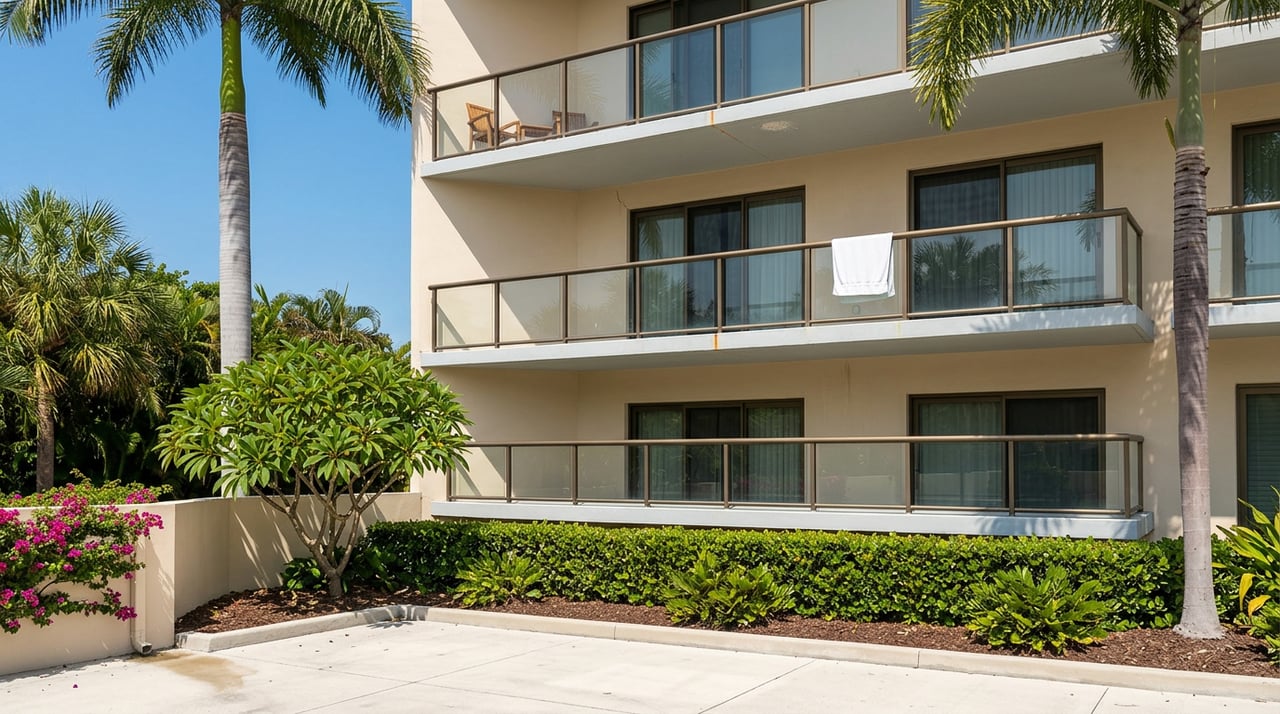
A buyer touring the coast this summer might see two units in the same afternoon. The first is a one-bedroom in a low-rise near Bonita Beach, built sometime in the 1970s, with shared stairwells and a common building elevator rather than a private one, and monthly dues that look almost too good to be true. The second is a corner unit at Infinity at The Colony, the 22-story tower that opened this past February inside The Colony at Pelican Landing, with a monthly fee substantial enough to fund a full amenity program and a real structural reserve. Every instinct built over the last twenty years of Florida condo shopping says take the cheap one and bank the difference.
That instinct is now backwards. Florida rewrote the rules governing condo reserves and structural inspections after the Champlain Towers South collapse in 2021, and by the middle of 2026 those rules have fully landed on Southwest Florida's coastline. A low fee on an older beachfront building no longer means a board that runs a tight budget. It often means a board that hasn't yet been forced to show its numbers, and the bill for that delay is coming due for someone, whether that's the current owners or the next one who signs a contract.
The Law That Rewrote the Math
Two pieces of legislation do the heavy lifting here. SB 4-D, passed in 2022 and refined by SB 154 in 2023, created two separate mandates for any condominium or cooperative building three habitable stories or taller: a milestone structural inspection and a Structural Integrity Reserve Study, known as a SIRS. The inspection is required at 25 years of age for buildings within three miles of the coast, 30 years for buildings farther inland, and every 10 years after that, in a two-phase process where a licensed engineer or architect first does a visual review and then, if that review flags substantial deterioration, moves to a more invasive Phase 2 evaluation.
The SIRS deadline, originally set for the end of 2024, was pushed to December 31, 2025 under HB 913. That deadline has already passed. Every condo association operating a building three stories or taller should already have a completed reserve study built into its current budget, and boards that haven't finished that work are already out of compliance with state law. On top of that, HB 1021 requires any association with 25 or more units to post its governing documents, budgets, and reserve studies to a website or app as of January 1, 2026, a rule that used to apply only to associations with 150 or more units. None of this is pending. It is already the law a Bonita Springs buyer is transacting under today.
Why the Countdown Matters Right Now
For many buildings, the milestone inspection deadline itself falls on December 31, 2026, a little under five months from today, according to PropertyExemption.com. Boards that haven't scheduled that inspection are running out of runway.
This only touches condominium and cooperative buildings three stories or taller. Single-family homes, duplexes, triplexes, and the low-rise garden condos under three stories are outside the milestone inspection statute entirely. That distinction matters in a market like Bonita Springs, where gated single-family communities sit a few miles from beachfront towers. A buyer comparing a villa in an amenity-rich HOA community against a beachfront condo tower is comparing two entirely different regulatory realities, not just two different price points.
Here is where the math gets concrete for a buyer sitting across from a special assessment notice:
An assessment is allocated by ownership percentage, as PropertyExemption explains. If your unit represents 2 percent of total ownership and the board levies a $1 million assessment to cover a concrete restoration or roof replacement, your share is $20,000.
Two Counties, One Zip Code
The coastal strip that markets itself as Bonita Springs actually crosses a county line, and that line affects who enforces this law on a given building. Bonita Beach, where most of the area's older 1970s and 1980s-era condos sit, falls under Lee County. Barefoot Beach, the gated community just to the south with its own beach-to-bay footprint, carries a Bonita Springs mailing address but sits in northern Collier County. A buyer trying to confirm whether a specific building has filed its milestone inspection needs to know which county's building department actually holds that record, because the two enforcement offices are not the same one.
Four Buildings, Four Positions on the Timeline
The compliance picture looks different depending on when a building went up and how tall it is. Four buildings currently active in the Bonita Springs market illustrate the range:
| Building | Delivered | Height | Where it sits under the 2026 rules |
|---|---|---|---|
| Older Bonita Beach condos (buildings like Bonita Beach Club, Bay Harbor Club, The Egret, SeaScape, and Beach and Tennis Club) | Mostly 1970 to 1985 | 3 to 8 stories, common elevators only | Already inside the 25-year coastal milestone window; a SIRS is required by law |
| Infinity at The Colony, inside The Colony at Pelican Landing | Opened February 2026 | 22 stories | Must maintain a SIRS; the milestone inspection clock won't start for roughly two and a half more decades |
| Botanika Condominiums at Bonita Fairways | Topped out in 2023, was expected to be complete in early 2024 | 3 stories over covered parking | Same SIRS obligation as Infinity, but an inland setting and a newer building envelope mean a lighter insurance and maintenance starting point |
| Lovers Key Beach Club and Resort | Established beachfront building | Mid-rise | Board approved its 2026 budget with no special assessment currently planned, an example of reserve funding done ahead of the deadline rather than after a crisis |
The lesson isn't that new construction is automatically the safer buy and old construction is automatically the risk. Infinity and Botanika both carry the same SIRS obligation as any older building three stories or taller. What separates them from a 1978 walkup isn't the law, it's the clock. A board with 25 years before its first milestone inspection has time to fund reserves gradually. A board with a 2026 deadline five months out does not.
What to Put in Writing Before You Offer
A rock-bottom monthly fee on an older building isn't disqualifying on its own. It's a prompt to ask for documents before writing an offer, not after.
- The current Structural Integrity Reserve Study and confirmation it has been incorporated into the 2026 budget.
- The most recent milestone inspection report, including Phase 2 findings if the building triggered one.
- The reserve funding percentage for major components. A rough industry rule of thumb: anything under 70 percent funded on a component with fewer than 10 years of expected life left is worth a closer look, and under 50 percent is worth a serious conversation about price or walking away entirely.
- The last 12 months of board meeting minutes, which often flag a pending vote on an assessment before it becomes official.
- The current insurance declarations page and deductible, since Florida's average premium for $300,000 of coverage runs around $7,136 against a national average of $2,543, according to one February 2026 market analysis, and a high deductible can turn a modest storm claim into an owner-funded repair.
- The estoppel certificate, which discloses any current or pending special assessment under Florida's condo disclosure statute, as EZ Funding Online explains.
If a building can't produce it on request, ask the association when the records will be available.
If You're the One Selling
The same documents matter in reverse for an owner listing an older Bonita Springs condo this year. Under most Florida condo purchase contracts, an assessment levied before the contract's effective date is the seller's responsibility, while one levied after typically becomes the buyer's. A seller who knows a milestone inspection or SIRS update is coming due has a real incentive to get ahead of the board vote rather than let it land mid-escrow, where it can stall or kill a closing that was otherwise clean.
A Few Questions Worth Asking Directly
Does the milestone inspection law apply to single-family homes or villas in Bonita Springs? No. It applies only to condominium and cooperative buildings three or more habitable stories tall. Single-family homes, duplexes, and triplexes fall outside the statute.
Is a brand-new building like Infinity at The Colony exempt from all of this? Not entirely. The SIRS requirement applies based on height, so any building three stories or taller needs one regardless of age. What a new building avoids is the milestone inspection age trigger, which won't apply for 25 to 30 years depending on distance from the coast.
Who actually confirms whether a building has filed its inspection? The local building official in the county where the building sits, either Lee County or Collier County depending on the address, since some Bonita Springs-marketed communities like Barefoot Beach fall on the Collier County side of the line.
Reading a condo's financials has become as important as reading its floor plan, and the buildings that look like a bargain on the surface are sometimes the ones asking the most of a buyer later. If you're weighing an older beachfront unit against a newer tower, or trying to figure out what a specific building's reserve study actually says about your future costs, Jill Nicholas can pull the documents and walk through them with you before you write an offer. Request a consultation and let's look at the numbers building by building, not just fee by fee.
This article is general information, not legal, tax or financial advice. Consult a qualified professional about your situation.